
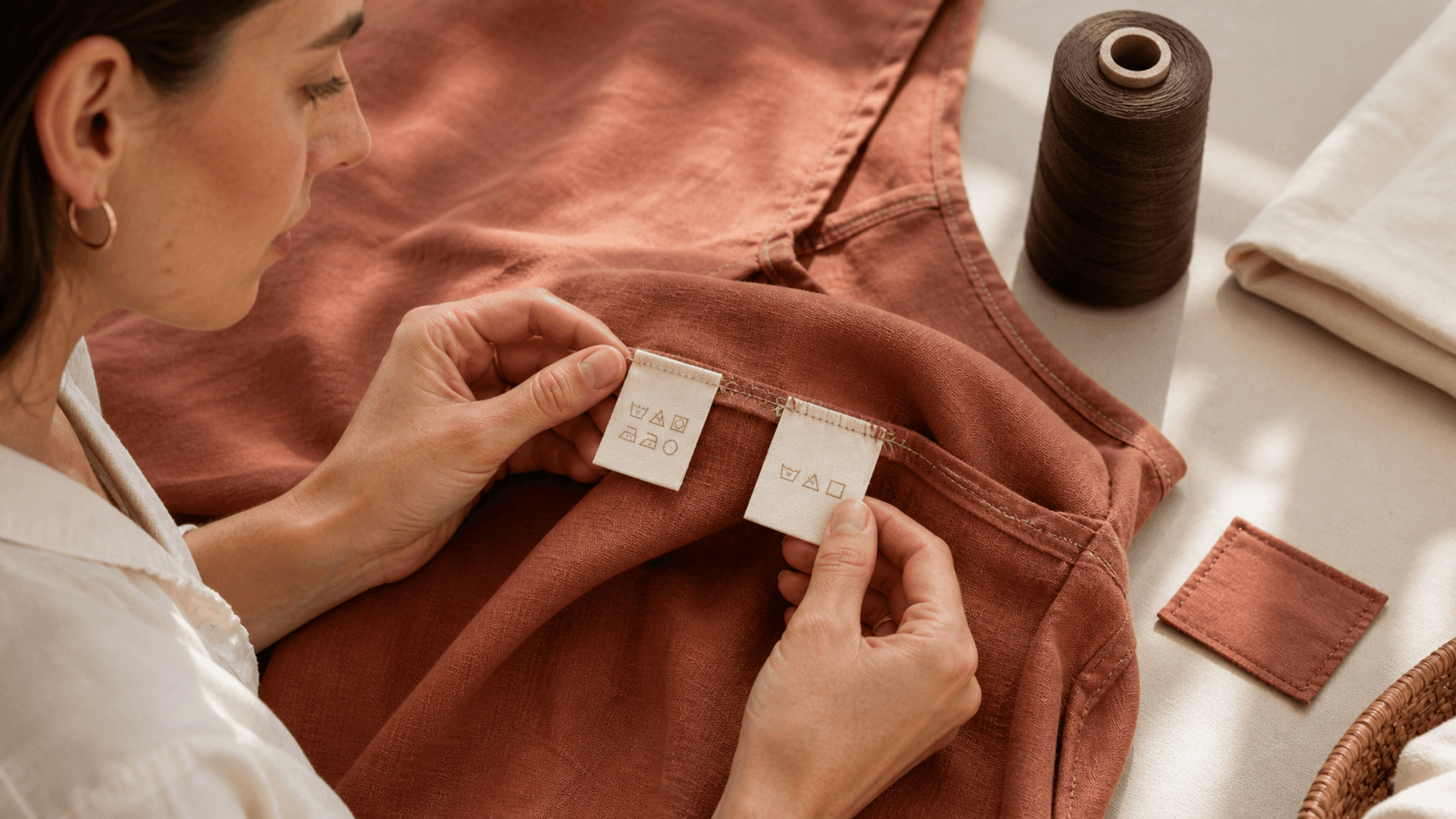
Keep Holiday Collections Ready for Sale
Care labels are more than a small production detail. They help customers care for a garment with confidence, protect the work you put into each piece, and support a polished brand experience after the sale.
October is a smart time for us to pause before holiday launches, restocks, and early next-season production. A missing warning or unclear instruction can turn a well-made item into a damaged return, an unhappy review, or a relabeling project. For gift buyers, clear directions matter even more, since they may not know how to handle a specialty fabric, print, or trim.
FTC-Compliant Care Label Requirements in the USA
FTC-compliant care label requirements in the USA generally apply to textile wearing apparel sold to consumers. Most covered garments need permanent, legible, and easy-to-find care instructions attached before sale. The goal is simple: customers should be able to see how to clean the item without guessing.
A label needs to give at least one safe method for caring for the garment. That does not mean every cleaning option must be listed. It does mean the directions you choose must be accurate for the finished item.
Care directions may need to address:
- Washing instructions, including hand washing or machine washing when appropriate
- Bleaching guidance, especially when bleach could harm the garment
- Drying directions, such as tumble dry, line dry, or lay flat to dry
- Ironing instructions when heat is safe or restricted
- Dry-cleaning instructions when dry cleaning applies
Words, approved standardized care symbols, or a combination of both may be used. Before we finalize artwork, we recommend having a reasonable basis for every instruction, such as supplier guidance, fabric specifications, wash-test results, or other product records. A care label should reflect what the garment can safely handle, not what seems typical for a similar-looking item.
Why Tiny Care Label Errors Create Big Problems
Small gaps can cause large headaches once garments are in customers' hands. "Wash normally" may sound friendly, but it does not tell someone whether to use cold water, bleach, high heat, or dry cleaning. Likewise, a garment that should not go in a dryer needs that warning clearly stated, not buried in tiny type.
We often recommend checking labels for common trouble spots before production, including:
- No drying instruction after a washing instruction
- Missing bleach warnings for colors, prints, or delicate materials
- Type that is too small, faint, crowded, or difficult to read
- Vague wording that leaves room for guesswork
- Symbols that are unclear or do not match the written directions
When customers accidentally shrink, fade, melt, or distort a garment, the result can be complaints, returns, damaged-garment claims, and extra work for your team. Missed details may also create problems with retailers or lead to concerns under FTC rules.
Care instructions are only one part of textile labeling. Fiber content, the business identity, and country-of-origin details may fall under separate labeling requirements. We suggest reviewing each disclosure on its own rather than assuming a care label covers every rule that applies to your product.
Match Care Instructions to Fabric Performance
The main fabric does not tell the whole story. A cotton body may tolerate machine washing, while a heat-sensitive print, satin lining, elastic band, decorative patch, or delicate trim changes the safest care method. Your final directions should protect the complete garment as it will be sold.
For example, a piece may be safe to machine wash in cold water but not safe for tumble drying. In that case, "machine wash cold" is not enough. The label should also tell the customer to line dry, lay flat to dry, or use another safe drying method. The same idea applies to ironing. If a print or embellishment needs low heat, inside-out ironing, or no ironing at all, the label should make that clear.
Before label artwork is approved, we recommend gathering the details in one place:
- Final fabric blend and fabric supplier guidance
- Wash-test notes for the actual finished garment
- Information on prints, embroidery, patches, dyes, and trims
- Lining, elastic, closures, and other construction details
- Any care limits created by the decoration method
This record gives your team a clearer reason for each direction printed on the label. It also helps prevent rushed artwork changes after labels have already been ordered.
Make Compliance Checks Part of Label Approval
A quick review step can save a lot of confusion later. We suggest involving the people who know the garment best, including the designer, product developer, fabric supplier, and the person approving label artwork. Each person can catch a different issue before the label goes into production.
Your approval checklist can stay simple:
- Confirm the care directions match the final garment, not an early sample
- Check that washing, bleaching, drying, ironing, and dry cleaning details are complete when applicable
- Make sure warnings appear where a normal cleaning method could cause harm
- Review wording and care symbols for consistency and readability
- Confirm the label will stay attached and remain readable through normal use
Holiday replenishments often move quickly in October, which makes this review especially useful. The same checklist can carry forward to resort and spring collections, helping us keep label decisions organized while production calendars get busier.
Turn Approved Care Details Into Labels Ready for Production
Care-label approval works best as a final quality-control step, not an afterthought. Once the fabric, construction, decoration, and care directions all match, your label artwork is ready to support a smoother customer experience. Clear instructions show customers that you have considered what happens after they open the package and wear the garment.
Before placing a label order, take one last look at the words, symbols, type size, and attachment plan. A carefully reviewed label helps customers care for their purchase correctly and helps prevent avoidable corrections once finished garments are already in hand.
Build Care Labels With Greater Confidence
Use our guide to FTC-compliant care label requirements in the USA to make informed choices for your next garment label project. At Peach Labels, we help brands create clear, durable labels that support proper garment care. If you need help selecting label materials or reviewing your options, contact us to discuss your project.